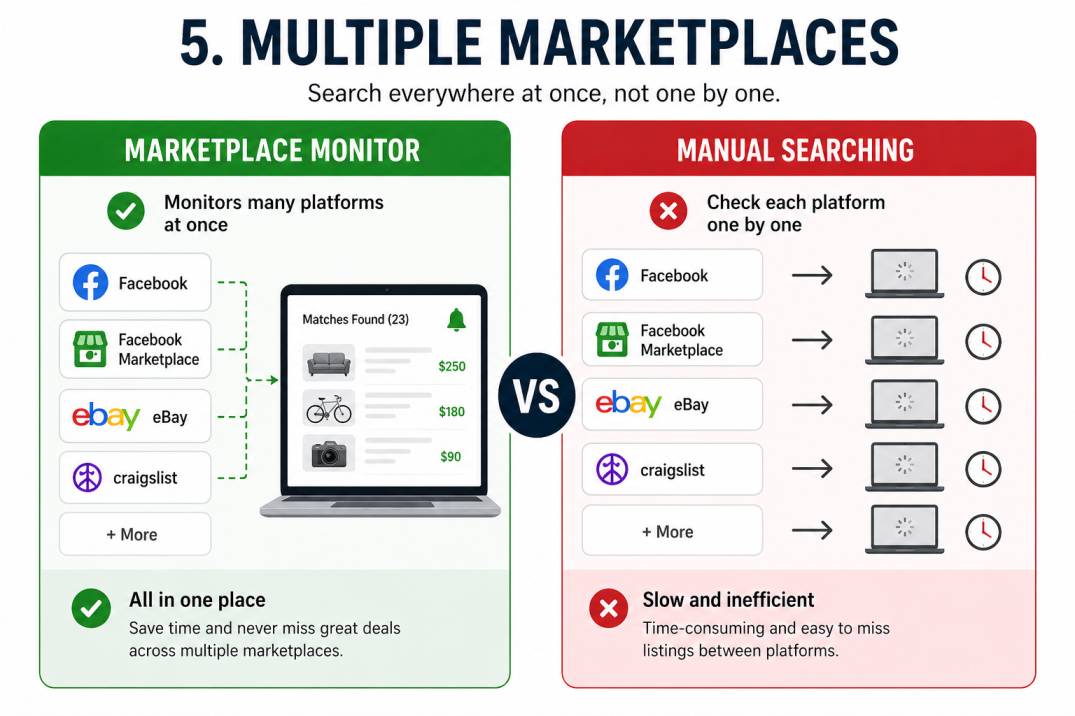
Marketplace Monitor vs Manual Searching:

Marketplace Monitor vs Manual Searching: Which Method Actually Finds Better Deals in 2026?

Finding profitable deals online used to feel simple. Open Facebook Marketplace, scroll for a while, message a few sellers, negotiate a price, and resell the item for profit. That was the workflow many early flippers followed when competition was still manageable and marketplaces weren’t flooded with thousands of new listings every hour.

Fast forward to today, and the landscape looks completely different.

Online marketplaces have grown into massive ecosystems processing billions of listings every year. According to recent ecommerce industry analysis published by Statista’s digital commerce report, global ecommerce sales are expected to exceed $7 trillion, with marketplaces dominating the majority of product discovery journeys. This shift changed how arbitrage works.

Manual searching still works — but it often feels like trying to find a needle in a haystack.

Automation tools like Marketplace Monitor attempt to solve that problem by scanning listings continuously and highlighting profitable opportunities automatically.

But does automation truly outperform manual searching?

Or does manual flipping still offer advantages that software cannot replicate?

Let’s break this down in a way that actually helps you decide.

How Marketplace Arbitrage Has Evolved

Marketplace arbitrage has quietly transformed into one of the most accessible online business models available today. The idea is straightforward — find undervalued products on online marketplaces and resell them at a higher price. However, the simplicity of the concept hides the increasing complexity behind successful execution.

Marketplaces now generate enormous volumes of real-time data. Platforms continuously update product prices, listing availability, seller ratings, and geographic availability. According to the OECD digital economy outlook, digital platforms are becoming increasingly data-driven, meaning pricing inefficiencies tend to disappear faster than they did even a few years ago.

This shift made speed more important than intuition.

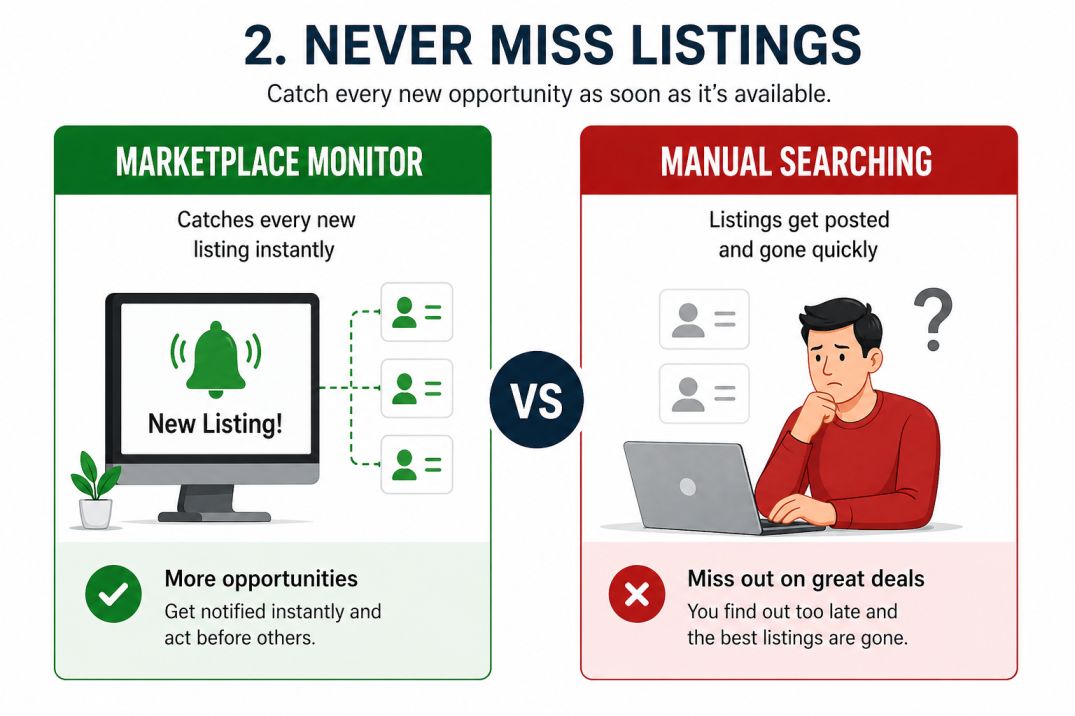
A seller who finds a deal first often wins the opportunity. A seller who discovers it hours later usually misses it entirely.

That’s where automation begins to matter.

Tools like marketplace scanning technology continuously analyze listings, filtering opportunities based on predefined conditions. Instead of relying purely on manual browsing, sellers gain access to structured deal discovery workflows.

The difference isn’t simply convenience.

It changes the probability of finding profitable listings consistently.

Why Competition Has Increased

More people than ever are exploring online reselling as a flexible income stream. The accessibility of marketplaces like Facebook Marketplace, eBay, OfferUp, and Craigslist has lowered entry barriers significantly.

Research published by McKinsey’s future of ecommerce report highlights how digital commerce participation expanded dramatically after 2020, with millions of new sellers entering marketplaces globally.

When more sellers compete for the same listings, the margin for error shrinks.

Manual searching becomes slower relative to competitors who use automation.

Opportunities don’t disappear because demand is low.

They disappear because someone else found them first.

Automation tools such as instant listing alerts reduce delay between listing publication and discovery, giving users a measurable advantage.


24/7 Gumtree Listing Monitoring

The Role of Data in Modern Flipping

Modern flipping increasingly resembles data analysis rather than guesswork.

Pricing patterns, demand cycles, and geographic trends influence whether a product can be resold profitably. According to insights from Harvard Business Review on data-driven decision making, organizations that rely on structured data outperform those relying purely on intuition.

The same principle applies to marketplace arbitrage.

Tools that identify price gaps between listings enable faster decision-making. Features such as marketplace arbitrage tools for finding price gaps highlight inconsistencies between similar listings, allowing sellers to act quickly.

Data doesn’t guarantee profit.

But it dramatically improves probability.


What Manual Marketplace Searching Really Looks Like

Manual searching typically involves browsing marketplaces directly and evaluating listings individually. Sellers often rely on keyword searches, category filters, and sorting by newest listings.

This approach provides direct exposure to marketplace behavior.

Many experienced flippers developed strong intuition by manually scanning listings daily.

Manual searching also allows flexibility when exploring niche product categories.

A seller browsing manually might discover unusual deals outside predefined filters.

However, manual searching depends heavily on time availability.

Missing a few hours of browsing may result in missed opportunities.

Unlike automated tools, manual searching operates only when the seller is actively looking.

Automation tools like consolidated results showing best deals continuously gather listings across categories, increasing visibility without increasing workload.
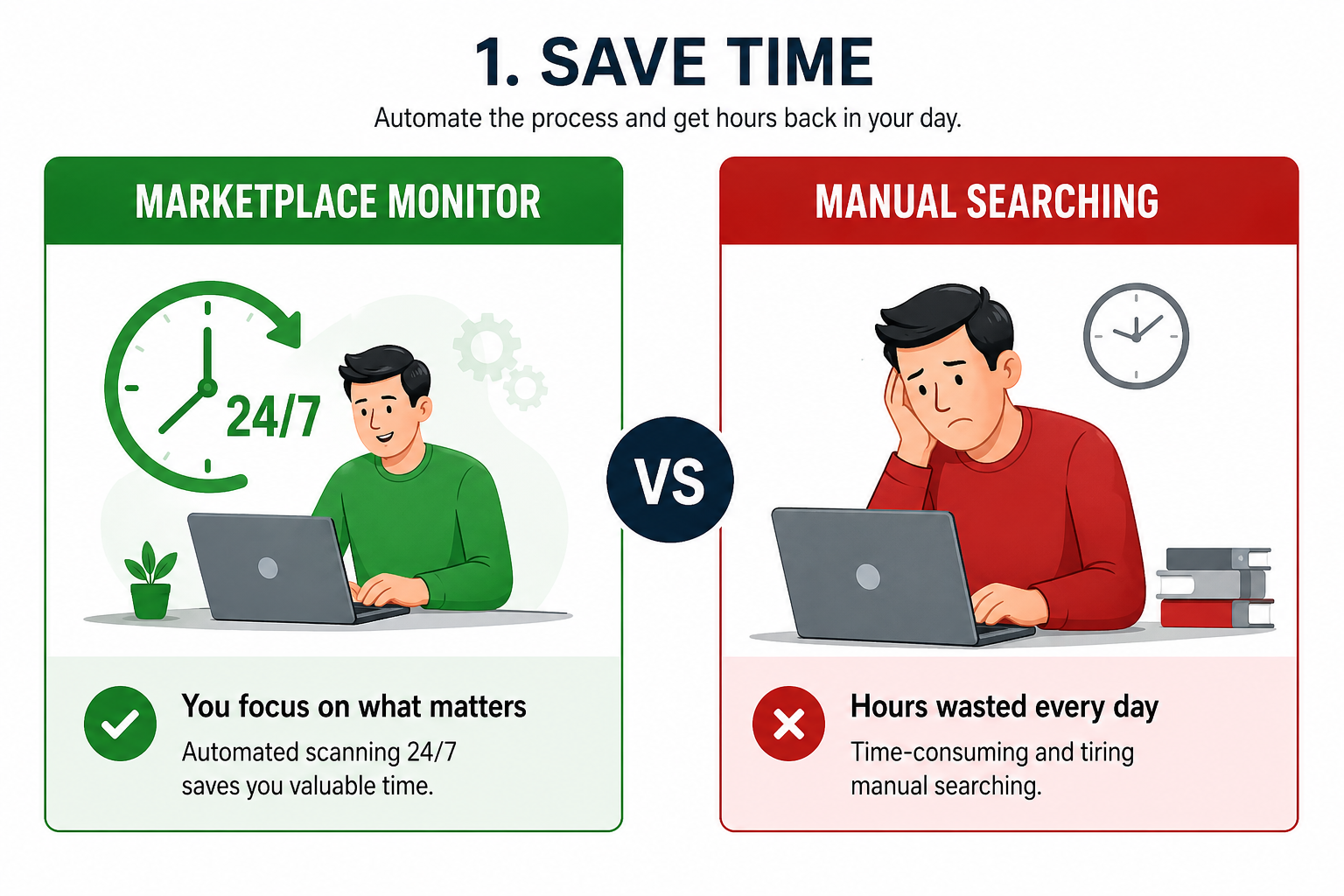
Manual workflows simply cannot monitor marketplaces continuously.

Humans need breaks.

Software does not.


24/7 Gumtree Listing Monitoring

Traditional Deal Discovery Workflow

Most manual flippers follow a routine.

They search keywords repeatedly, adjust filters, refresh listings, and compare prices across multiple tabs.

While this process can work, it often becomes repetitive.

Searching multiple marketplaces individually increases cognitive fatigue.

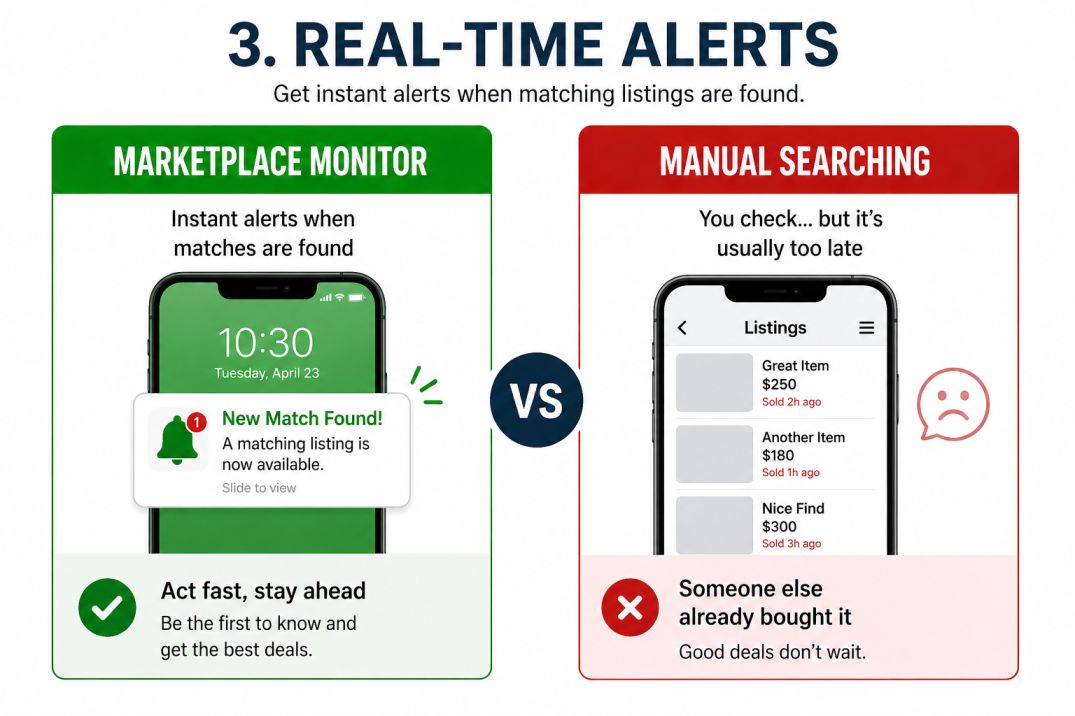
Automation tools simplify this process by delivering mobile notifications for deal alerts whenever relevant listings appear.

Instead of searching continuously, sellers receive alerts when opportunities meet their criteria.

Efficiency improves dramatically.


Situations Where Manual Searching Still Works

Manual searching still provides value in certain scenarios.

Unique collectibles, rare items, or hyper-local listings may not appear frequently enough for automated tools to detect patterns.

Some sellers prefer manual browsing because it provides a sense of control over deal discovery.

Manual searching can also help beginners understand marketplace pricing psychology.

However, relying exclusively on manual searching limits scalability.

Automation expands coverage beyond individual browsing capacity.

Manual searching introduces several structural limitations that become more apparent as marketplaces grow.

Time investment increases significantly.

Opportunity cost becomes unavoidable.

Human attention has limits.

Automation removes many of these constraints by scanning listings continuously.

Features such as automatic scam and spam filtering also improve listing quality, reducing time spent evaluating unreliable offers.

Manual searching requires evaluating every listing individually.

Automation filters irrelevant listings automatically.

Time Limitations and Opportunity Cost

Time spent manually browsing listings cannot be invested elsewhere.

Professional sellers often manage inventory sourcing, communication, shipping logistics, and pricing strategies simultaneously.

Manual searching consumes significant attention resources.

Automation tools allow sellers to focus on decision-making rather than discovery.

Efficiency compounds over time.

Consistent deal discovery leads to more predictable revenue patterns.

Human Bias in Product Selection

Manual searching often reinforces familiar product categories.

Sellers may overlook profitable opportunities in unfamiliar niches.

Automation expands exposure by scanning multiple categories simultaneously.

Broader visibility improves opportunity diversity.

Reducing bias improves long-term arbitrage consistency.

What Marketplace Monitor Does Differently

Marketplace Monitor operates as a structured deal discovery engine.

Instead of manually scanning listings, users configure criteria describing the types of listings they want to discover.

The platform continuously monitors marketplaces and surfaces matching opportunities.

Features such as instant Facebook marketplace alerts provide near real-time visibility into newly published listings.

Automation changes workflow structure significantly.

Searching becomes optional rather than necessary.

24/7 Gumtree Listing Monitoring

Automated Marketplace Scanning Technology

Marketplace Monitor continuously analyzes listing data across multiple marketplaces.

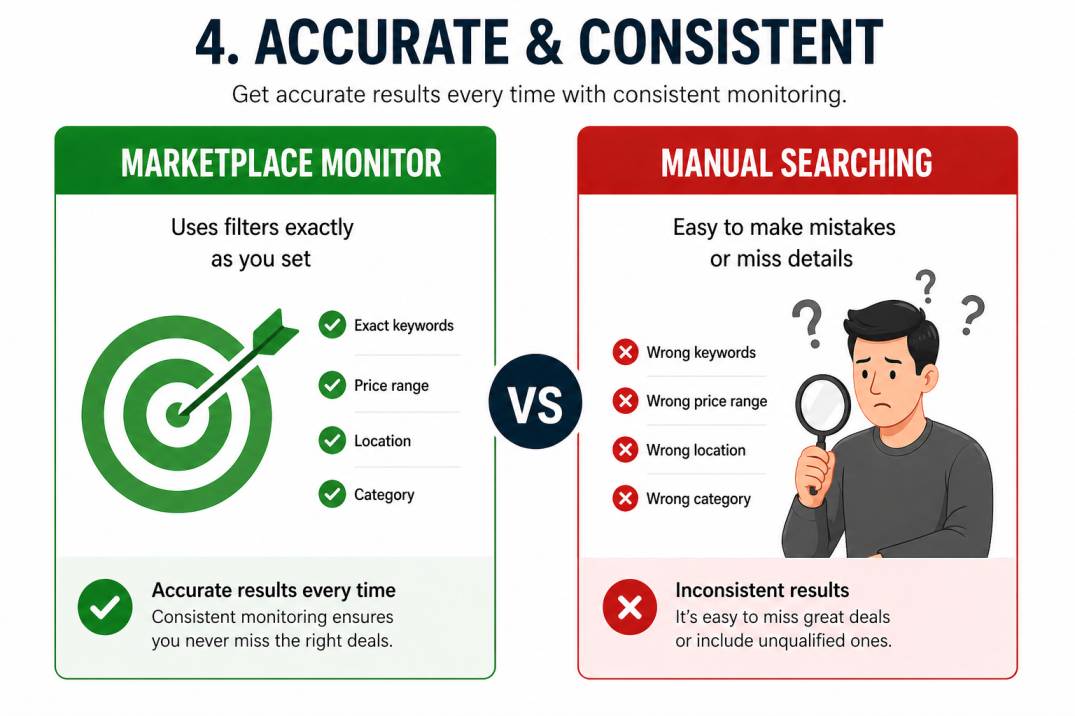
Users define filters related to pricing thresholds, product categories, and geographic locations.

Listings matching those parameters are surfaced automatically.

Tools such as nationwide Facebook marketplace car searching expand discovery beyond local browsing limitations.

Automation removes geographic constraints that typically limit manual search workflows.

Scaling becomes easier.

Coverage becomes broader.


24/7 Gumtree Listing Monitoring

Intelligent Listing Alerts

Real-time notifications allow sellers to react quickly when relevant listings appear.

Features such as deal sourcing software for agents and affiliate resellers support structured arbitrage workflows for both individuals and teams.

Automation provides continuous discovery.

Manual searching provides intermittent discovery.

Consistency often determines profitability.

Core Differences Between Marketplace Monitor and Manual Searching

The fundamental difference lies in how opportunities are identified.

Manual searching relies on effort.

Marketplace Monitor relies on structured automation.

Automation increases coverage, speed, and consistency simultaneously.

Manual searching increases workload.

Automation increases leverage.

24/7 Gumtree Listing Monitoring

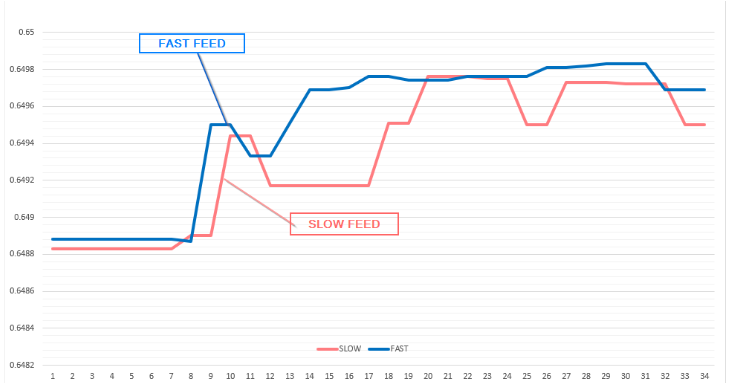
Speed of Opportunity Discovery

Listings priced below market value often receive immediate attention.

Sellers using automation tools can respond quickly to new opportunities.

Real-time alerts improve response time significantly.

Manual searching introduces delay between listing publication and discovery.

Speed influences deal acquisition success rate.

Automation improves timing accuracy.

Manual price comparison requires interpreting multiple listings individually.

Automation tools aggregate listing data automatically.

Features such as marketplace automation for high volume sellers improve analytical consistency.

Consistent evaluation improves decision quality.

Structured data reduces uncertainty.

Ability to Scale Deal Sourcing

Manual searching scales poorly because it depends on time availability.

Automation scales efficiently because filters can monitor multiple categories simultaneously.

Tools such as side hustle flipping software allow users to expand sourcing workflows without increasing manual workload.

Scaling becomes manageable.

Growth becomes sustainable.

Factor Marketplace Monitor Manual Searching
Speed
Real-time alerts
Delayed discovery
Effort
Low manual effort
High manual effort
Coverage
Multi-category scanning
Limited browsing capacity
Scalability
Easily scalable
Difficult to scale
Consistency
Predictable results
Variable results
Efficiency
High efficiency
Time intensive
24/7 Gumtree Listing Monitoring

Which Method Produces More Consistent Profits

Profitability depends on consistent access to opportunities.

Automation tools increase probability of discovering profitable listings regularly.

Manual searching may produce occasional high-margin deals but lacks predictable consistency.

Consistency supports business planning.

Automation supports consistency.

Predictability vs Randomness

Manual searching introduces randomness because results depend on browsing timing.

Automation introduces predictability because filters continuously monitor listings.

Predictable workflows improve revenue forecasting.

Consistency reduces uncertainty.

24/7 Gumtree Listing Monitoring

Efficiency vs Effort

Manual searching requires continuous effort.

Automation requires initial configuration.

Efficiency compounds over time.

Small improvements in workflow efficiency often produce significant long-term impact.

Automation enhances productivity.

Who Benefits Most from Marketplace Monitoring Software

Marketplace monitoring tools benefit both beginners and experienced sellers.

Beginners gain faster exposure to pricing patterns.

Experienced sellers gain operational efficiency.

Automation supports scaling strategies.

Manual searching supports exploration.

Both methods have value.

However, automation offers broader long-term advantages.

Side Hustlers vs Professional Sellers

Side hustlers often value time efficiency because they balance multiple responsibilities.

Automation reduces time investment required for deal discovery.

Professional sellers benefit from structured workflows that support consistent inventory sourcing.

Efficiency improves operational stability.

Agencies and High Volume Resellers

Agencies managing multiple marketplaces benefit significantly from automation.

Tools such as facebook marketplace automation software enable centralized monitoring across categories.

Centralization simplifies workflow management.

Efficiency increases scalability.

Automation supports team productivity.

Final Thoughts on Data Driven Arbitrage

Manual searching still offers learning value.

However, structured automation provides measurable advantages in competitive marketplaces.

Data-driven arbitrage aligns with modern ecommerce dynamics.

Automation improves consistency.

Consistency supports growth.

Frequently Asked Questions

Is Marketplace Monitor better than manual searching?

Marketplace Monitor generally provides faster deal discovery through real-time alerts and automated listing analysis.

Automation helps beginners understand pricing patterns while reducing time spent searching manually.

Manual flipping still works but typically requires more effort compared to automated monitoring tools.

Monitoring software scans listings continuously and identifies opportunities based on predefined filters.

Automation improves consistency of opportunity discovery, which often supports more predictable profit outcomes.